lincoln ac 225 arc welder manual
Lincoln AC-225 Arc Welder Manual: Article Plan
This comprehensive guide details the Lincoln AC-225 arc welder‚ covering safety‚ setup‚ operation‚ maintenance‚ and troubleshooting—a vital resource for all users.
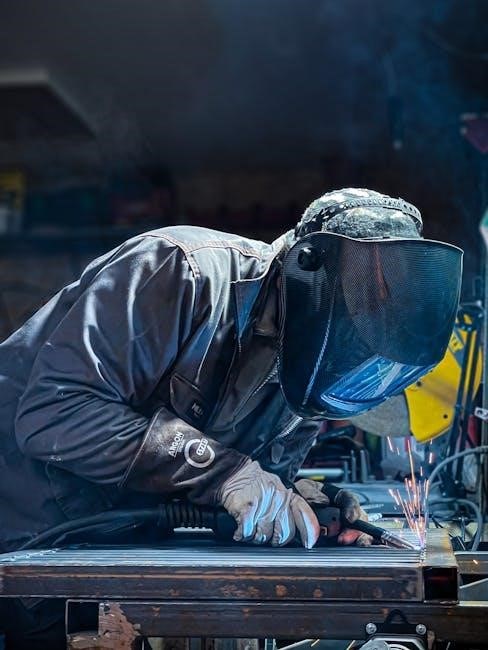
The Lincoln AC-225 is a widely recognized and highly dependable arc welder‚ celebrated for its robust construction and straightforward operation. This machine has become a staple in workshops‚ farms‚ and construction sites due to its versatility and ability to handle a diverse range of welding applications. Manufactured by Lincoln Electric‚ a leading name in welding technology‚ the AC-225 offers a balance of power and portability‚ making it suitable for both professional welders and DIY enthusiasts.
Its simple design allows for easy setup and use‚ while its durable components ensure long-lasting performance. The AC-225 is capable of welding with various electrodes‚ including mild steel‚ stainless steel‚ and hardfacing rods‚ providing flexibility for different projects. This manual will guide you through the safe and effective operation of your Lincoln AC-225‚ maximizing its potential and ensuring years of reliable service. Understanding its specifications and features is key to achieving optimal welding results.
Safety Precautions
Welding with the Lincoln AC-225 demands strict adherence to safety protocols to prevent serious injury. Electrical shock is a primary hazard; always ensure the machine is properly grounded and work in a dry environment. Wear dry‚ hole-free gloves for insulation and avoid contact with live electrical parts. Arc radiation emitted during welding can cause burns – utilize appropriate eye and skin protection‚ including a welding helmet with the correct shade lens and protective clothing.
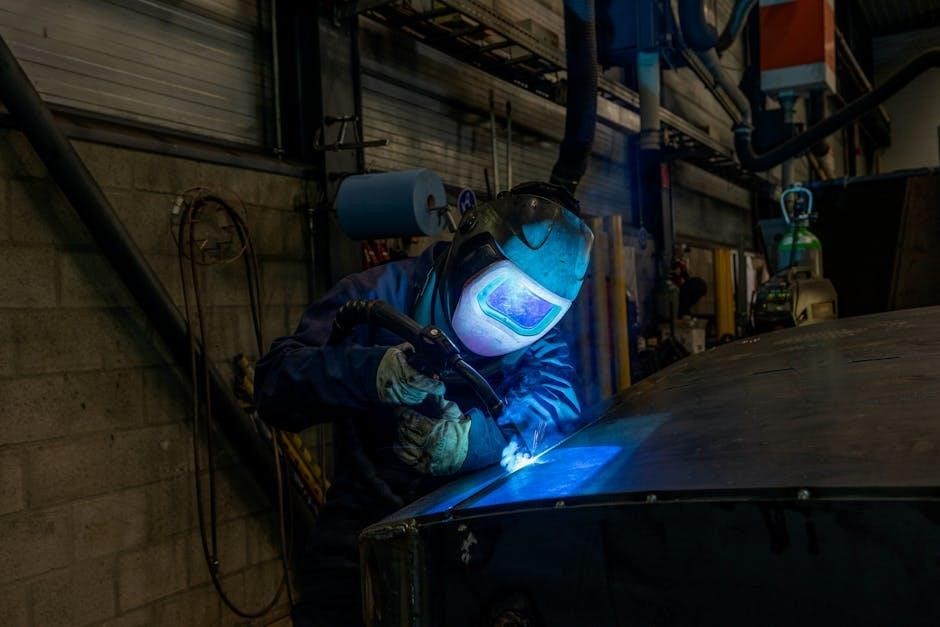
Furthermore‚ welding processes generate fumes and gases that can be harmful if inhaled. Adequate ventilation is crucial; work in a well-ventilated area or use a fume extractor. Be aware of flammable materials nearby‚ as sparks and hot metal can ignite them. Only qualified individuals should perform maintenance or repairs; Prioritize safety to ensure a productive and injury-free welding experience.
Electrical Shock Hazards
Electrical shock poses a significant risk when operating the Lincoln AC-225. The welder operates on high voltage‚ and contact with live parts can be fatal. Always ensure the machine is properly grounded according to the instructions‚ utilizing a suitable grounding conductor. Inspect cables and connections regularly for damage‚ replacing any worn or frayed components immediately.
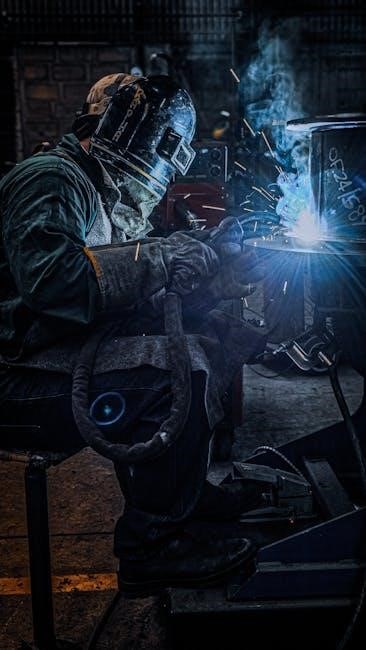
Never work in damp or wet conditions‚ as water significantly increases the risk of shock. Insulate yourself from both the workpiece and the ground using dry insulation – ensuring it covers your entire area of contact. Avoid touching electrodes or metal parts while the power is on. Remember to disconnect the power source before performing any maintenance or repairs. Prioritizing these precautions is crucial for safe operation.
Arc Radiation Protection
Arc welding with the Lincoln AC-225 generates intense ultraviolet (UV) and infrared (IR) radiation‚ posing serious risks to your eyes and skin. Always wear a properly shaded welding helmet with a suitable filter lens to protect your eyes from arc rays‚ which can cause arc flash – a painful and potentially blinding condition.
Protect your skin by wearing appropriate clothing‚ such as long sleeves‚ gloves‚ and a welding jacket‚ to prevent burns. Arc rays can burn skin even at a distance. Shielding the welding area with welding curtains or screens can also minimize exposure to bystanders. Be mindful of reflected radiation from shiny surfaces. Prioritize these protective measures to safeguard your health during welding operations.
Fume and Gas Exposure
Welding with the Lincoln AC-225 produces fumes and gases that can be hazardous to your health. These fumes contain particles from the electrode‚ base metal‚ and any coatings present. Inhalation can lead to respiratory irritation‚ metal fume fever‚ and long-term health problems.
Ensure adequate ventilation in the welding area – either natural or forced – to remove fumes and gases. Use local exhaust ventilation whenever possible‚ positioned close to the welding arc. Wear a respirator if ventilation is insufficient or when welding in confined spaces. Be aware of the materials being welded‚ as some produce more toxic fumes than others. Always consult the Safety Data Sheets (SDS) for the electrodes and base metals used.
AC-225 Specifications
The Lincoln AC-225 is a robust and versatile arc welder designed for a variety of applications. Key specifications include an input power requirement of 230/460 Volts‚ single or three-phase‚ at 60 Hertz. Its rated output‚ on AC‚ is 225 Amps at 25 Volts‚ with a 20% duty cycle. For DC welding‚ the output is 125 Amps at 25 Volts‚ also with a 20% duty cycle.
Input current varies depending on the output‚ but the machine is designed for a broad range of amperage. The recommended accessories‚ like the wheel kit‚ enhance portability. These specifications ensure reliable performance for both professional and hobbyist welders. Refer to the product label and operator’s manual for precise details.
Input Power Requirements (Voltage/Phase/Hertz)
The Lincoln AC-225 welder offers flexible input power options to accommodate various electrical setups. It’s designed to operate on either 230 Volts or 460 Volts‚ providing adaptability for different shop environments. The welder can function on single-phase or three-phase power‚ further increasing its usability.
Crucially‚ the standard operating frequency is 60 Hertz. Always verify your power supply matches these requirements before operation to prevent damage to the machine. Incorrect voltage or frequency can lead to malfunction or safety hazards. Consult a qualified electrician if you are unsure about your power supply configuration. Proper input power is essential for optimal performance.

Rated Output Current and Voltage (AC & DC)
The Lincoln AC-225 delivers a robust welding output‚ capable of handling a wide range of materials and thicknesses. In AC (Alternating Current) mode‚ the welder provides a maximum output of 225 Amps at a voltage of 25 Volts. This setting is ideal for general-purpose welding applications‚ offering excellent arc stability and control.
When switched to DC (Direct Current) mode‚ the output adjusts to 125 Amps at 25 Volts. DC welding provides a more focused arc‚ suitable for precision work and welding specific metals like stainless steel. The duty cycle at these outputs is approximately 20%‚ meaning it can sustain this output for 2 minutes out of every 10. Understanding these ratings is crucial for efficient and effective welding.

Duty Cycle Information
Understanding the duty cycle of the Lincoln AC-225 is paramount for preventing overheating and ensuring longevity. The duty cycle represents the percentage of time within a 10-minute period that the welder can operate at a specific amperage without exceeding its temperature limits. For the AC-225‚ a typical duty cycle at its maximum output of 225 Amps (AC) and 125 Amps (DC) is around 20%;
This means you can weld continuously for 2 minutes‚ then must allow the machine to cool for 8 minutes. Exceeding this duty cycle can trigger the thermal overload protection‚ shutting down the welder. Proper duty cycle management extends the life of the transformer and maintains consistent weld quality. Always refer to the amperage chart for specific duty cycle ratings at different output levels.
Setting Up the AC-225
Proper setup is crucial for safe and efficient operation of the Lincoln AC-225. Begin with a thorough initial inspection‚ verifying all components are present and undamaged. Ensure the power cord is in good condition‚ and the machine is free from any visible defects. Next‚ securely position the welder on a stable‚ non-flammable surface‚ ideally with the wheel kit installed for mobility.
Grounding is paramount for electrical safety. Connect a properly sized grounding cable from the welder’s grounding terminal to a known earth ground‚ such as a grounded metal water pipe or a grounding rod. Never operate the welder without a secure ground connection. Double-check all connections before powering on the machine.
Initial Inspection and Assembly
Before first use‚ a meticulous inspection is essential. Unpack the Lincoln AC-225 and verify all listed components are present – the welder itself‚ power cable‚ electrode holder‚ ground clamp‚ and this operator’s manual. Carefully examine the welder for any shipping damage‚ such as dents‚ cracks‚ or loose parts. Inspect the power cable for cuts or fraying; do not use if damaged.
Assembly is typically minimal. Ensure the electrode holder and ground clamp are securely attached to their respective cables. Confirm the connections are tight and free of corrosion. If a wheel kit was purchased‚ follow the separate installation instructions to attach it to the welder’s base for easier portability. A visual check confirms proper assembly before proceeding.
Grounding Instructions
Proper grounding is paramount for safety. The Lincoln AC-225 must be connected to a suitable grounding source to minimize the risk of electrical shock. Utilize a grounding rod driven deep into the earth‚ or a properly grounded metal water pipe – ensuring it’s a true earth ground. Connect the ground clamp from the welder directly to the workpiece being welded‚ as close to the weld area as possible.
Never ground to gas pipes or any other potentially hazardous surfaces. Ensure the ground connection is clean and free of paint‚ rust‚ or other contaminants. A poor ground can lead to erratic arc behavior and increased shock risk. Always inspect the ground clamp and cable for damage before each use‚ replacing if necessary. Prioritize a secure‚ reliable ground for safe operation.

Welding with AC-225: Basic Techniques
Mastering the AC-225 requires understanding fundamental welding techniques. Begin by selecting the correct electrode for your material – mild steel‚ stainless steel‚ or hardfacing electrodes all demand different approaches. The AC-225’s 40-225 amp selector switch is key to achieving a stable arc. Initiate the arc with a quick flick of the wrist‚ maintaining a consistent arc length.
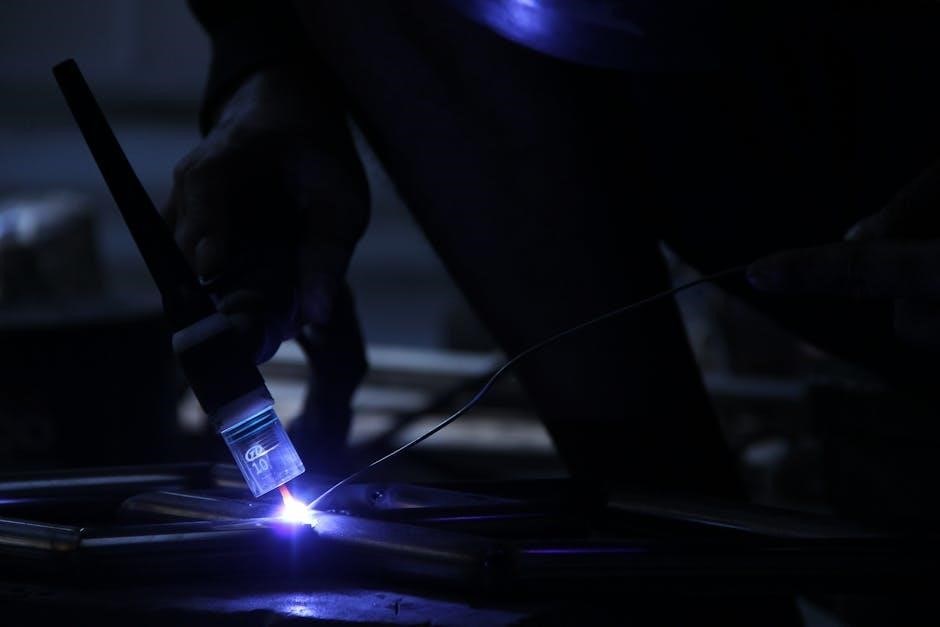
Travel speed significantly impacts weld quality; too fast results in weak welds‚ while too slow causes excessive buildup. Practice consistent movement and observe the weld pool. The AC-225’s smooth arc facilitates various electrode types. Remember to adjust amperage based on material thickness and electrode type for optimal results. Consistent practice builds proficiency.
Selecting the Correct Electrode
Choosing the right electrode is crucial for successful welding with the Lincoln AC-225. Mild steel typically utilizes E6010 or E7018 electrodes‚ offering good penetration and strength. For low hydrogen applications‚ E7018 is preferred‚ minimizing porosity. Stainless steel requires specific electrodes like E308L or E309L‚ ensuring corrosion resistance. Hardfacing electrodes‚ such as those containing chromium or tungsten‚ enhance wear resistance.
Electrode diameter impacts amperage requirements; thicker electrodes need higher currents. Consult data for all Lincoln electrodes to determine the appropriate size and type for your project. Consider the welding position – some electrodes perform better in specific orientations. Proper electrode selection directly influences weld quality and durability.
Current Setting Guide (Amperage Chart)
Proper amperage selection is vital for a quality weld with the Lincoln AC-225. A general guideline suggests 50-90 amps for 1/8″ electrodes‚ 90-130 amps for 3/32″ electrodes‚ and 130-175 amps for 5/32″ electrodes. For 1/4″ electrodes‚ settings range from 175-225 amps. These are starting points; adjust based on material thickness‚ joint design‚ and electrode type.
Lower amperage results in slower travel speed and increased penetration‚ while higher amperage offers faster travel but shallower penetration. Observe the arc – a smooth‚ stable arc indicates a correct setting. Refer to Lincoln Electric’s data for specific electrode recommendations. Experimentation and practice are key to mastering amperage control for optimal results.

Recommended Accessories
Enhance your Lincoln AC-225’s capabilities with these recommended accessories. A wheel kit‚ including an axle and two wheels with assembly hardware‚ significantly improves portability around the workshop or jobsite. Consider a welding helmet with auto-darkening features for eye protection and increased efficiency. High-quality welding gloves are essential for hand safety‚ alongside a fire-resistant jacket or apron.
Additional useful accessories include a chipping hammer and wire brush for slag removal‚ and various electrode holders and ground clamps for secure connections. Lincoln Electric offers a comprehensive range of electrodes optimized for use with the AC-225‚ ensuring consistent performance and weld quality. Investing in these accessories maximizes the welder’s potential.
Wheel Kit Installation
Installing the wheel kit on your Lincoln AC-225 greatly enhances its portability. Begin by carefully unpacking all components – the axle‚ two wheels‚ and associated assembly hardware. Position the welder on a stable surface. Attach the axle to the designated mounting points on the welder’s base‚ ensuring proper alignment.
Secure the axle using the provided bolts and washers‚ tightening them firmly but avoiding over-tightening. Next‚ slide the wheels onto the axle ends and fasten them with the appropriate hardware. Double-check all connections for tightness and stability before attempting to move the welder. A properly installed wheel kit allows for easy maneuvering and transport.
Parts List and Diagrams
Accessing a detailed parts list and accompanying diagrams is crucial for maintaining and repairing your Lincoln AC-225. These resources enable efficient identification of components for replacement or troubleshooting. The parts list typically includes item numbers‚ descriptions‚ and part numbers for every weld machine component‚ from the main transformer to smaller hardware pieces.
Exploded view diagrams visually represent how these parts assemble‚ aiding in understanding the welder’s internal structure. Refer to the official Lincoln Electric documentation‚ often available online or through customer support‚ to obtain the most accurate and up-to-date parts information. Pages 16-17 often contain these vital resources.
Troubleshooting Common Issues
Encountering problems with your Lincoln AC-225 is inevitable‚ but many can be resolved with basic troubleshooting. Common issues include a lack of output power‚ erratic arc behavior‚ or the welder failing to start. First‚ verify the input power supply and ensure proper grounding. Check the electrode holder connections and work clamp for cleanliness and tightness.
Inspect the internal fuses and circuit breakers for any signs of damage or tripping. If the welder still malfunctions‚ consult the operator’s manual for specific diagnostic steps. Remember‚ attempting repairs without proper knowledge can be dangerous; qualified personnel should handle complex issues. Prioritize safety and always disconnect power before inspecting internal components.
Maintenance and Care
Regular maintenance is crucial for extending the lifespan and ensuring optimal performance of your Lincoln AC-225. After each use‚ remove any spatter from the electrode holder‚ work clamp‚ and welder casing. Periodically inspect the power cable for damage and replace if necessary. Clean the cooling fan and vents to prevent overheating.
Check and tighten all connections‚ including those on the control panel. Lubricate moving parts as recommended in the operator’s manual. Store the welder in a clean‚ dry environment to protect it from moisture and corrosion; Following these simple steps will minimize downtime and maintain the welder’s reliability for years to come.
Understanding the Control Panel
The Lincoln AC-225 control panel features a straightforward design for ease of operation. A prominent 40-225 amp selector switch allows quick and precise current adjustments‚ ensuring a uniform arc. This switch directly controls the welding amperage output‚ catering to various electrode types and material thicknesses. The polarity switch enables selection between AC and DC welding modes‚ expanding versatility.
Additional indicators may include a power indicator light and‚ on some models‚ overload protection indicators. Familiarizing yourself with each control’s function is essential for safe and effective welding. Refer to the operator’s manual for detailed explanations and diagrams of the control panel layout.
Lincoln Electric Contact Information

For comprehensive support regarding your Lincoln AC-225 arc welder‚ Lincoln Electric offers multiple avenues for assistance. You can reach them directly at their headquarters located at 22801 St. Clair Avenue‚ Cleveland‚ Ohio 44117-1199‚ USA. Their dedicated phone support line is available at 1;216-481-8100‚ providing expert guidance on operation‚ maintenance‚ and troubleshooting.
Furthermore‚ Lincoln Electric maintains an extensive online presence through their website‚ www.lincolnelectric.com‚ offering downloadable manuals‚ parts lists‚ and frequently asked questions. Customers can also connect with Lincoln Electric through various social media platforms for updates and community support. Prompt and reliable assistance is readily available to ensure optimal performance and longevity of your welding equipment.


Leave a Reply
You must be logged in to post a comment.